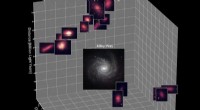
Could a computer be so powerful that it could simulate the universe? The answer is yes—and this is no longer a distant dream but the imminent reality of supercomputing. Canada is now racing to stake its claim as a global leader in this transformative field.
At the forefront of this effort is Ryan Grant, an assistant professor of computer science at Queen’s University and former researcher at Sandia National Laboratories. With deep expertise in high‑performance computing, Grant is driving Canada’s ambition to build world‑class supercomputing capabilities.
Supercomputers are not merely faster laptops; they are purpose‑built problem‑solving engines that tackle the most complex scientific and societal challenges—from designing life‑saving drugs to forecasting climate shifts.
Grant envisions a Canada where these machines accelerate research, enhance product development, and safeguard public health by predicting pandemics and testing new therapeutics.
“World‑class supercomputers enable us to ask better questions,” he told the Queen’s Gazette. “They are indispensable tools for discovery, innovation, and productivity that directly improve lives.”
Despite their potential, Canada’s current supercomputing resources lag behind global leaders. As of 2024, the nation’s most powerful system ranks outside the top 100 worldwide, limiting its competitiveness in AI, climate modeling, and drug discovery.
“Technology evolves at an unprecedented pace, and governments worldwide must keep up,” Grant explains. “Our challenge is securing sustained funding and creating a viable investment model to build, maintain, and upgrade these systems.”
Grant advocates for a public‑private partnership as the key to unlocking Canada’s full potential. By aligning federal support with industry investment, the country can construct cutting‑edge infrastructure and attract top talent.
Grant’s journey to supercomputing leadership began with a PhD from Queen’s, followed by pivotal work at Sandia National Laboratories where he helped develop software now deployed in supercomputers worldwide.
Back in Canada, he leads the Computing at Extreme Scale Advanced Research (CAESAR) lab, already a rising star in the field. “We are the spark that lights the flame,” Grant says. “Canada hosts some of the world’s best AI experts; we must train supercomputing architects to support their ambitions.”
As Canada strives to catch up, Grant’s vision inspires a new generation of scientists and engineers to push the boundaries of what’s possible. The future of supercomputing in Canada is bright—and it begins with Grant’s mission to elevate the nation to the forefront of the global community.