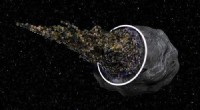
Just two years ago, Saturn eclipsed Jupiter as the planet with the most moons in our Solar System, boasting 145 satellites. Recent follow‑up work by the same team has revealed that this figure was only the beginning. The new study identified 128 additional moons orbiting Saturn, raising its total to 274—nearly twice the combined count of all other planets.
The discovery, supported by researchers from the University of British Columbia, was officially catalogued by the International Astronomical Union’s Minor Planet Center.
In 2023, the team announced 62 new moons based on data from the Canada‑France‑Hawaii Telescope gathered between 2019 and 2021. While those 62 objects were confirmed satellites, the researchers spotted several other candidates that could not be definitively verified. To resolve this, they scheduled a dedicated observing campaign around Saturn for three consecutive months in 2023.
"Given the likelihood that many of those candidates were genuine moons and that more remained undiscovered, we returned to the same sky fields for a continuous three‑month observing run in 2023," explained Edward Ashton, a postdoctoral fellow at the Institute for Astronomy and Astrophysics, Academia Sinica, and lead author of the study.
The campaign yielded 128 new moons.
Of the 128 additions, 95 were first identified by the team, while 33 had been previously recorded by another group in 2004 but only confirmed in this work.
Consistent with the 2023 findings, most of these newly detected satellites are irregular moons—objects with large, eccentric orbits. Such moons are thought to have been captured by Saturn’s gravity rather than forming in situ alongside the planet.
Because of their diminutive sizes, the team surmises that many of these moons likely originated from collisions in Saturn’s past.
These bodies, only a few kilometres across, appear to be fragments of a handful of larger, originally captured moons that were shattered by violent impacts—either with fellow Saturnian satellites or passing comets," noted Brett Gladman, professor of physics and astronomy at UBC.
The discovery elevates Saturn to the sole planet in our Solar System with over 200 moons, solidifying its reign at the top of the lunar rankings.
While future surveys may uncover additional moons around other planets, the researchers believe none will eclipse Saturn’s tally in the foreseeable future.
Ashton added, "Based on our projections, Jupiter will never catch up."