Digital Vision./Photodisc/Getty Images
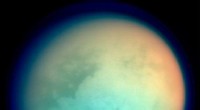
Like our Moon, Venus cycles through a series of phases as it orbits the Sun. These phases are most clearly visible with a telescope or binoculars, and they reveal the planet’s position relative to Earth and the Sun.
Venus is the second planet from the Sun, and it lies inside Earth’s orbit. Because of this inner‑orbit geometry, the side of Venus that faces the Sun is always illuminated. When the planet is positioned between Earth and the Sun, we see only a thin crescent of the illuminated side. As Venus moves along its orbit, more of that illuminated hemisphere becomes visible, eventually forming a nearly full disk. The Sun, however, blocks us from seeing the planet when it is fully illuminated.
Venus is a bright target in the evening or morning sky. A pair of binoculars or a small telescope is sufficient to discern its changing phases. Use a star chart to locate the planet and note its position relative to the Sun and the Moon for best viewing conditions.
The planet looks brightest and most nearly full when it is on the far side of the Sun relative to Earth. During this configuration, you see the majority of its illuminated side. The visual effect is similar to a full Moon, but you will never see a complete full phase because the Sun’s glare obscures the planet’s fully illuminated face from our perspective.
Because Venus orbits inside Earth’s orbit, a fully illuminated disk would always face the Sun. The Sun’s glare blocks our view, so the maximum we can observe is a nearly full planet.
Venus’ phases provide a fascinating demonstration of planetary geometry and light reflection. By understanding its orbital mechanics, you can predict when the planet will appear full or near‑full and enjoy this brilliant celestial neighbor from the comfort of your backyard.