Digital Vision/Getty Images
When Earth and Venus are on opposite sides of the Sun, the closest they can get is about 41.4 million km (25.7 million mi). At this point, Venus is more than 100 times farther from Earth than our Moon. To put it into perspective, a spacecraft would need to circumnavigate Earth roughly a thousand times to cover that distance. However, the two planets’ elliptical orbits mean their separation can stretch to 261 million km (162 million mi) at their farthest.
A single year on Venus lasts 225 Earth days, while a Venusian day is 117 Earth days long—much longer than Earth’s 24‑hour day—because the planet rotates slowly and in the opposite direction. The planet’s proximity to the Sun makes it the brightest object in the night sky. Its surface is dominated by over 1,000 volcanoes exceeding 20 km (12 mi) in diameter, and its thick CO₂ atmosphere traps heat, raising temperatures to about 471 °C (880 °F).
Venus and Earth are strikingly alike. Surface gravity is nearly identical: 8.87 m s⁻² (29.1 ft s⁻²) on Venus versus 9.81 m s⁻² (32.04 ft s⁻²) on Earth. Venus’s radius is only 400 km smaller than Earth’s, and its circumference differs by a mere 2,000 km. Venus’s mass is 0.815 × that of Earth.
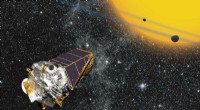
Japan’s Akatsuki spacecraft, launched in 2010, aimed to orbit Venus for two years to gather data. It missed orbital insertion, but Japan plans a re‑attempt in 2015 when the satellite will be near Venus again. The European Space Agency’s Venus Express, launched in 2005, has orbited the planet since 2006. In 1989, NASA’s Magellan mission mapped over 98 % of Venus’s surface, marking a significant milestone in planetary exploration.