By Chris Deziel
Updated Mar 24, 2022
La_Corivo/iStock/Getty Images
The aurora borealis, commonly known as the northern lights, paints the night sky with ethereal green and violet hues. While the spectacle is most frequently seen near the North Pole—in Alaska, northern Canada, and Greenland—it can occasionally appear farther south during periods of heightened solar activity. To maximize your chances, find a dark, cloud‑free location with an unobstructed view of the northern horizon.
In the 1950s, scientists confirmed a link between solar surface activity and the aurora. The Sun’s intense heat strips hydrogen atoms into protons and electrons, which stream toward Earth in the solar wind. Upon reaching our planet, these charged particles are guided by the magnetic field and accumulate near the magnetic poles. Interactions with atmospheric oxygen and nitrogen produce the luminous displays we see.
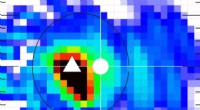
Solar activity fluctuates; events such as flares, coronal mass ejections, and coronal holes can eject swarms of particles traveling around 1,000 km/s (620 mph). When these high‑energy particles strike Earth, the aurora intensifies and spreads further south. Scientists monitor the Sun with dedicated instruments, and NOAA’s Ovation tool provides real‑time forecasts indicating when and where the aurora is likely to appear.
The aurora is centered on Earth’s magnetic pole, which lies slightly north of the geographic pole. Consequently, North American locations can view the lights at lower latitudes than their European or Asian counterparts. During strong solar storms, the display can even reach as far south as New Orleans. If the Ovation forecast predicts visibility in your area and the sky is dark, head to a clear northern vista, face north, and watch the sky come alive.
Solar cycles peak roughly every 11 years, but you don’t have to wait for a maximum. Small, remote communities in Alaska and Canada’s Yukon, Northwest Territories, and Nunavut offer pristine, light‑pollution‑free skies—ideal for aurora spotting. The best season is winter, when nights are longest and darkest, and the optimal time of night is around local midnight. In the continental United States, northern Maine, Minnesota, North Dakota, Montana, Idaho, and Washington provide the best opportunities.