The solar system formed roughly 4.6 billion years ago. While we cannot witness the event, scientists reconstruct it through theoretical models and empirical evidence. A massive cloud of mostly hydrogen collapsed under gravity, igniting the Sun at its core. The resulting solar radiation pushed lighter elements outward while gravity drew heavier atoms inward, setting the stage for planet formation.
As the Sun’s gravity balanced with outward pressure, nearby atoms began to accrete into ever larger clumps. These protoplanets grew by colliding with one another, eventually forming the planets we see today. Proximity to the Sun determined composition: inner planets incorporated heavier materials, while outer bodies retained lighter elements. Inside each planet, differentiation concentrated the densest materials toward the core, leaving lighter substances nearer the surface.
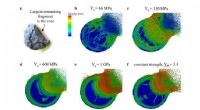
In the early 1970s, planetary scientists proposed the giant‑impact (or large‑impact) hypothesis. It posits that a Mars‑sized body, often called Theia, collided with the proto‑Earth. The glancing strike ejected a significant amount of Earth’s outer material into orbit, which later coalesced into the Moon. The impact also tilted Earth’s rotational axis by about 23.5°, producing the seasonal cycle we experience.
Because the colliding body’s core merged with Earth’s, only the lighter, crust‑like material was flung into space. Consequently, the Moon’s bulk is depleted in iron and other heavy elements, giving it a lower density than Earth. This observation, alongside the synchronous spin of Earth and Moon and the precise match in isotopic signatures, strongly supports the giant‑impact model.