By Jo Burns | Updated Mar 24, 2022
NASA reports that the Moon travels roughly 382,400 km each 29.53‑day lunar cycle, gradually waxing and waning as it orbits Earth. The cycle’s eight distinct phases are visible from anywhere on the planet, offering a nightly celestial rhythm that can be observed from the comfort of your own porch.
Moon phases, in order: New Moon → Waxing Crescent → First Quarter → Waxing Gibbous → Full Moon → Waning Gibbous → Third Quarter → Waning Crescent.
The Moon sits between Earth and the Sun, its illuminated side facing the Sun. To us, the far side is dark and the Moon is effectively invisible in the night sky. This marks the start of the lunar cycle.
Following the new moon, a sliver of the Moon’s disk becomes illuminated. This crescent moves eastward across the sky and becomes visible shortly after sunset.
Exactly one‑quarter of the cycle complete, the Moon shows a half‑lit face. The right side is illuminated for observers in the Northern Hemisphere, and the left for those in the Southern Hemisphere.
More than half of the Moon’s surface is illuminated, and the illuminated portion grows each night until the Moon is full.
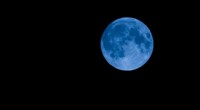
The entire face of the Moon is lit. It rises around sunset and sets around sunrise, filling the western sky with a bright, round disk.
After the full moon, the illuminated area begins to shrink each night while still occupying more than half the disk.
The Moon is again half‑lit, but now the left side is illuminated (in the Northern Hemisphere). The cycle is three‑quarters complete.
A thin sliver remains visible just before sunrise. With each passing night the sliver shrinks until the next new moon returns the cycle to its starting point.