Photo credit: Steve Goacher / iStock / GettyImages
Our Moon has fascinated cultures worldwide, but beyond myth it is a well‑studied natural satellite that shapes Earth’s environment. Its unique characteristics and the way it is classified have intrigued astronomers and laypeople alike.
The Moon is Earth's only natural satellite. Its diameter is about 2,160 mi (3,475 km)—roughly one‑fourth of Earth's diameter—making it a comparatively large satellite. Although it occupies only about 1 % of Earth's mass, the volume ratio means Earth could fit roughly 50 Moon‑sized bodies inside it.
It orbits Earth at an average distance of 239,000 mi (384,000 km) in 27.3 days, the sidereal month. Light takes approximately 1.3 seconds to travel between Earth and the Moon. The Moon’s apparent size is about 0.5° of the sky, the same as the Sun’s apparent diameter.
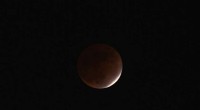
Because of the Moon’s slightly elliptical orbit, a full Moon can occur when the Moon is at perigee, producing a visibly larger “super‑Moon”. The full lunar cycle, or synodic month, lasts 29.5 days.
The Moon’s rotation period matches its orbital period (synchronous rotation), so the same hemisphere faces Earth continuously. This explains why we never see the far side from the surface.
The Earth–Moon pair has an unusual diameter ratio of 4 : 1, placing the Moon among the solar system’s five largest satellites and nearly the size of Mercury.
The Moon’s phases result from the changing geometry between Earth, Moon, and Sun. Starting with the new Moon (fully dark to an Earth observer), the sequence proceeds: waxing crescent, first quarter, waxing gibbous, full Moon, waning gibbous, third quarter, and waning crescent before returning to new Moon.
Knowing the phase allows a rough estimate of the time of day and direction of the Moon’s appearance.
Other cultural names, such as the “pink Moon” for the April full Moon, stem from folklore rather than color.
The lunar surface is covered in craters, a testament to billions of years of impacts without atmospheric erosion. Temperatures range from –233 °C to 123 °C (–387 °F to 253 °F) due to the absence of a substantial atmosphere.
Seismic activity, or “moonquakes,” indicates a molten core. The Moon has been the destination for 12 astronauts (all U.S. men) during the Apollo missions; future private ventures and NASA’s Artemis program aim to return humans—including the first woman—to the Moon by 2024.