By Alyssa Brode Updated Mar 24, 2022
Biletskiy_Evgeniy/iStock/GettyImages
Our solar system’s eight planets orbit the Sun, each boasting a distinctive size and character. Below is a concise, data‑rich guide to the circumference of each planet in miles, paired with essential facts that highlight what sets them apart.
Mercury, the smallest planet, has a circumference of 9,522 miles and an area of 28,873,225 sq mi. Its barren, crater‑laden surface experiences extreme temperature swings—up to 800 °F during the day and as low as 300 °F at night—due to its thin, heat‑retaining atmosphere. Mercury is visible from Earth roughly a dozen times per century during occultations of the Sun.
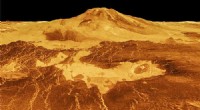
Venus shares a similar size with Earth, boasting a circumference of 23,617 miles and an area of 177,628,840 sq mi. A dense atmosphere laden with sulfuric‑acid clouds reflects sunlight, making Venus one of the brightest bodies in our sky. The planet’s greenhouse effect heats its surface to about 900 °F, crushing all probes that land on it. Venus hosts more than a thousand volcanoes across its rocky terrain.
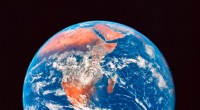
Earth, the third planet from the Sun, has a circumference of 24,889 miles and an area of 197,280,733 sq mi. Seventy percent of this area is covered by oceans. Its 23‑degree axial tilt generates four distinct seasons, while a balanced atmosphere protects life from solar radiation and shields us from meteoroids.
Mars, the “Red Planet,” has a circumference of 13,256 miles and an area of 55,963,741 sq mi. Notable features include Olympus Mons, the Solar System’s tallest volcano, and Valles Marineris, a canyon system spanning the width of the United States. Polar ice caps grow and shrink with the seasons, though temperatures are generally too low for liquid water to persist on the surface.
Jupiter dominates the Solar System with a staggering circumference of 278,985 miles and an area of 24,787,374,965 sq mi. This gas giant hosts 63 moons, including four that rival planetary size. Visible ammonia clouds and alternating dark belts and light zones form the planet’s characteristic bands. The Great Red Spot—a massive storm—has persisted for over three centuries.
Saturn’s circumference measures 235,185 miles, covering an area of 17,615,265,865 sq mi. Its hydrogen‑helium composition is complemented by a complex ring system composed mainly of water ice. Atmospheric winds reach hurricane speeds, creating distinct banded patterns. Saturn has 52 moons, two of which orbit within its rings.
Uranus, the seventh planet, circles the Sun with a circumference of 99,739 miles and an area of 3,168,132,663 sq mi. Methane gives the planet a blue‑green hue. The planet’s rotation axis is tilted nearly 90°, resulting in extreme seasonal variations that are muted by its distant orbit. Uranus boasts 11 rings, oriented perpendicularly to its orbit, and 27 known moons.
Neptune, at 96,645 miles in circumference and 2,974,591,827 sq ft in area, resides nearly three million miles from the Sun. Its orbit takes over 150 years to complete. Despite its distance, Neptune displays powerful atmospheric winds, a striking blue color from methane, and a fierce storm called the Great Dark Spot. The planet has 13 moons, six rings, and a dynamic weather system.