While humanity remains a long way from constructing a city on the Red Planet, scientists and architects are already drafting bold blueprints for how our first Martian settlements might look and function. These designs converge on a few key principles: robust protection from radiation and extreme temperatures, efficient use of limited resources, and a balance between communal and private living spaces.
Geodesic domes—a structure built from a network of triangles—are a favorite for Mars habitats because of their strength-to-weight ratio and the ease with which they can enclose large volumes. In 2018, a team of six researchers at the Hawaii Space Exploration Analog and Simulation (HI‑SEAS) tested a lightweight, plastic dome in a remote, arid region near Mauna Loa volcano. The structure featured separate sleeping quarters and communal areas, demonstrating how a dome can house a small crew under simulated Martian conditions.
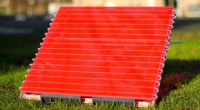
On Mars, however, standard glass would let lethal ionizing radiation through. Most dome proposals therefore call for opaque, white panels that reflect sunlight, or for layers of regolith—Martian soil—buried over the dome to absorb radiation and shield inhabitants from heat.
Because Mars lacks the conditions for natural forests, designers are envisioning “artificial forests” that combine habitable structures with green infrastructure. MIT’s award‑winning “Redwood Forest” concept places tree‑shaped habitats inside domes, with underground tunnels that provide private, climate‑controlled spaces shielded from radiation and extreme temperatures. The tree‑like layout also offers psychological benefits by mimicking Earth’s natural scenery.
Some proposals favor subterranean solutions: deep tunnels, natural caves, or engineered caverns that can be lined with insulation and radiation shielding. Others suggest modular habitats—essentially space‑capsule‑style modules with movable walls that can be reconfigured as needs evolve. Early colonists might even repurpose parts of their transport spacecraft as temporary living quarters until more permanent structures are constructed.
Every design must strike a delicate balance: providing safe, comfortable public and private areas while shielding residents from Mars’ harsh environment. As the first settlements grow, they will likely evolve—much like early Earth colonies—shaped by both technological advances and the practical realities of living on another planet.