Our solar system hosts eight officially recognized planets. After Pluto’s 2006 reclassification as a dwarf planet, the remaining planets are divided into three groups: the rocky terrestrial planets (Mercury, Venus, Earth, Mars), the gas giants (Jupiter, Saturn), and the ice giants (Uranus, Neptune). The distance of each planet from the Sun profoundly influences its composition and climatic conditions.
Mercury, the smallest planet, orbits the Sun at an average distance of 36 million miles (58 million kilometers). Its diameter measures 3,031 miles (4,880 kilometers). The planet completes one revolution every 88 Earth days and rotates on its axis in just 59 days, giving it the shortest orbital period of all the planets. Its surface is a mix of smooth plains and deep impact craters, dominated by rock and metal.
Venus lies 67.2 million miles (108 million kilometers) from the Sun. With a diameter of 7,521 miles (12,104 kilometers), it is the sixth largest planet. Venus takes 225 days to orbit the Sun but has a retrograde rotation, completing a spin in 243 Earth days—the longest day of any planet. Its dense, cloud‑covered surface features volcanic plains and towering mountain ranges.
Earth is situated 93 million miles (149.6 million kilometers) from the Sun. Its 7,926‑mile (12,742 kilometer) diameter makes it the fifth largest planet. Earth’s annual orbit takes 365.25 days, while a day lasts 24 hours. About 70 % of its surface is covered by water, and it is the only known planet to support life. Scientists estimate Earth’s age at over 4.5 billion years.
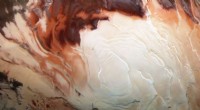
Known as the Red Planet, Mars is 141.6 million miles (227.9 million kilometers) from the Sun. Its diameter is 4,222 miles (6,779 kilometers). Mars requires 687 days to orbit the Sun and rotates in 24.6 hours. The planet’s iron‑oxide‑rich surface gives it its distinctive color, and it hosts two small moons, Phobos and Deimos.
Jupiter, the giant of our system, is 483.8 million miles (778.5 million kilometers) from the Sun. With a diameter of 88,729 miles (142,984 kilometers), it could contain more than a dozen Earths side‑by‑side. Jupiter’s orbital period is 11.86 years, and it rotates on its axis in just 9.84 hours, making it the planet with the shortest day. The gas‑rich planet hosts over 63 moons, the largest being Ganymede.
Saturn sits 886.7 million miles (1,429 million kilometers) from the Sun. Its 74,600‑mile (120,536 kilometer) diameter makes it the second largest planet. Saturn’s rings—composed of billions of ice particles—are its most iconic feature. The planet takes 29.46 years to orbit the Sun and rotates in 10.2 hours. Despite its gaseous composition, Saturn would float if placed in a gigantic bathtub of water.
Uranus is 1,784.0 million miles (2,870 million kilometers) from the Sun. Its 32,600‑mile (52,642 kilometer) diameter makes it the third largest planet. The ice‑giant’s axis is tilted nearly 98°, giving it extreme seasonal variations. Uranus completes an orbit every 84.07 years and rotates in 17.9 hours. Its atmosphere is a mix of hydrogen, helium, and methane, with no solid surface.
The most distant planet, Neptune, lies 2,794.4 million miles (4,498 million kilometers) from the Sun. With a 30,200‑mile (48,532 kilometer) diameter, it ranks fourth in size. Neptune’s orbital period is 164.81 years, and it rotates in 19.1 hours. Like Uranus, its composition is dominated by hydrogen, helium, and methane.