By John London | Updated Mar 24, 2022
The Sun has illuminated the solar system for approximately 4.6 billion years, maintaining a remarkably stable output. Its core reaches temperatures around 15 million °C (27 million °F), hotter than any terrestrial environment. The Sun is composed of roughly 90 % hydrogen, which undergoes nuclear fusion to produce helium, releasing the energy that powers our world. Solar energy—captured through photovoltaic panels—provides a clean, renewable electricity source that can be stored or fed directly into the grid.
Sunspots are cooler, darker regions on the solar surface, caused by intense magnetic activity. While they appear darker, the surrounding plasma can be thousands of degrees hotter. These spots often appear in pairs or groups and can persist for weeks or months. Solar flares are sudden, powerful releases of magnetic energy, invisible in visible light but capable of emitting energy equivalent to the Sun’s entire output in a fraction of a second.
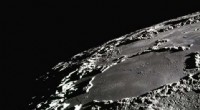
The Moon, our nearest celestial neighbor, is only about one‑sixth the diameter of Earth and lacks a protective atmosphere. Consequently, its surface is littered with impact craters from meteoroids that would be shielded on Earth. Its weak gravity—roughly one‑sixth of Earth’s—makes walking feel markedly lighter. The Moon remains the only extraterrestrial body that humans have landed on and walked upon.
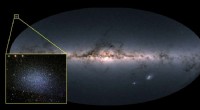
The universe hosts an unfathomable number of stars; astronomers estimate between 10^22 and 10^24. From Earth, roughly 7,000 stars are visible to the naked eye. Many of these stars no longer exist, yet their light, traveling across vast distances, still reaches us—a reminder of the dynamic nature of the cosmos. The apparent twinkling of stars results from atmospheric turbulence that refracts their light before it reaches our eyes.