Chad Baker/NASA/Digital Vision/Getty Images
The Soviet Union’s Luna 1 launched on January 2, 1959, ushered in a new era of lunar exploration. Subsequent missions challenged long‑held assumptions about the Moon’s origin and revealed surprises that are now guiding plans for future expeditions and even lunar habitats.
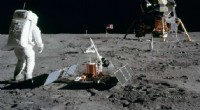
During Apollo 15, astronauts trained to locate a “Genesis Rock” – a fragment of the Moon’s primordial crust. Though initially hailed as the holy grail, detailed analysis revealed it to be an anorthosite, a common mineral formed early in lunar history. Its size and composition, however, provided scientists with a rare glimpse of conditions in the solar system less than 100 million years after the Sun’s birth.
On Apollo 17, scientist‑astronaut Harrison Schmitt encountered a patch of orange dust on the otherwise gray surface. After careful sampling, he identified orange volcanic glass, confirming that the Moon experienced volcanic activity billions of years ago.
In 2010, data from the Japanese Aerospace Exploration Agency’s 2007 lunar orbiter confirmed the existence of lava tubes beneath the Moon’s crust. These underground caves, once merely theoretical, now represent potential natural shelters for future astronauts and could be converted into long‑term bases.
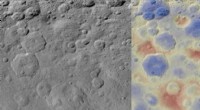
The most consequential finding came in 2009 when NASA’s LCROSS probe deliberately crashed into the Cabeus crater at the lunar south pole. Spectroscopic analysis detected abundant water ice, a resource essential for life support, power generation, and propulsion—making the Moon a more viable destination for sustained human presence.