stta/iStock/GettyImages
Few individuals have reshaped the scientific landscape as profoundly as the Italian physicist and astronomer Galileo Galilei. Celebrated as the "father of modern science," his revolutionary experiments in mathematics, physics, and astronomy laid the foundations of the Scientific Revolution of the 16th and 17th centuries. By systematically challenging the long‑established Aristotelian worldview, Galileo not only disproved prevailing cosmological models but also introduced principles that remain core to contemporary science.
Galileo Galilei, Italy’s preeminent 17th‑century scientist, transformed physics and astronomy. His rigorous experiments validated heliocentrism, introduced inertia, and refined the telescope, earning him the title "father of modern science".
Galileo’s study of falling bodies established that all objects descend at the same rate regardless of mass or shape—an outcome that refuted Aristotle’s claim that heavier objects fall faster. By timing the descent of varied weights, he deduced that distance travelled is proportional to the square of the elapsed time. Moreover, he formulated the concept of inertia: an object will maintain its state of rest or uniform motion until acted upon by an external force. This insight later became the cornerstone of Isaac Newton’s first law of motion.
In 1598, Galileo launched his own geometric and military compass—a device he called a sector. The instrument combined two perpendicular rulers with a third curved segment, allowing users to perform a range of calculations. Military engineers employed the sector to determine the elevation of cannon barrels, while merchants used it for currency conversion. Although the venture yielded modest profits, it showcased Galileo’s inventive spirit beyond the laboratory.
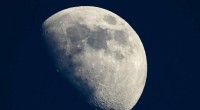
While Galileo did not invent the telescope, he refined Dutch designs by grinding lenses to a greater precision, creating a 30‑fold magnifying instrument. With this advanced telescope, he made several groundbreaking observations: the rugged, cratered surface of the Moon; the four largest satellites of Jupiter—now known as the Galilean moons; sunspots and their rotational movement; and the full set of Venusian phases. These discoveries demonstrated that the heavens were dynamic, complex, and far from the immutable spheres Aristotle had imagined, and they revealed countless stars invisible to the naked eye.
In the early 16th century, Polish astronomer Nicolaus Copernicus proposed that the Earth orbits the Sun, a radical departure from the Earth‑centric cosmos. Galileo’s telescopic observations—particularly Jupiter’s moons and the uneven lunar surface—provided concrete evidence against the Aristotelian model and supported Copernicus’s heliocentric theory. His conclusions, however, antagonized the Catholic Church, which upheld Aristotelian cosmology. In 1633, the Roman Inquisition condemned Galileo as a heretic, forcing him to recant heliocentrism and subjecting him to house arrest until his death in 1642.