By Lucas Kittmer
Updated Aug 30, 2022
greenleaf123/iStock/GettyImages
Galileo Galilei, the pioneering Italian physicist and astronomer, is best known for proving that Earth orbits the Sun. Yet his legacy spans a series of groundbreaking discoveries that reshaped our understanding of physics and motion. Despite facing scrutiny from the Church, Galileo persisted, ushering in a new era of empirical science and mathematical rigor.
After the invention of the telescope in the Netherlands, Galileo crafted his own instruments using rudimentary spectacle lenses. By refining his designs, he observed the phases of Venus and noted that they mirrored those of the Moon. This observation led him to conclude that the Sun—not Earth—was the center of the solar system, overturning the geocentric model that had dominated for centuries.
While a young scholar in a cathedral, Galileo noticed that a swinging chandelier completed each swing in the same duration, even as the amplitude decreased. He formalized this as the principle of the pendulum, establishing that a pendulum’s period depends solely on its length and gravity, not on its mass or the force applied. This insight became the foundation for accurate timekeeping.
Contrary to Aristotle’s claim that heavier objects fall faster, Galileo challenged the notion by dropping objects of varying mass from the Leaning Tower of Pisa. He found that all objects reached the ground simultaneously when air resistance was negligible, demonstrating that acceleration due to gravity is constant for all masses.
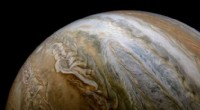
Galileo’s telescopic observations revealed that the Moon’s surface is rugged, not smooth. In 1610, he discovered the four largest moons of Jupiter—Io, Europa, Ganymede, and Callisto—providing decisive evidence for a heliocentric system. He also noted that many more stars exist than are visible to the naked eye, challenging the prevailing view of the heavens.
Galileo’s work transcended descriptive observations; he introduced mathematics as the language of nature. By applying quantitative analysis and the scientific method, he corrected long‑held Aristotelian doctrines and laid the groundwork for modern physics. His methodological rigor established a precedent for experimental verification that endures in scientific inquiry today.