By David Swan • Updated
For high‑resolution images, visit Ablestock.com and Getty Images.
A star’s life cycle depends on its mass. Below is a hands‑on demonstration using five plastic globes and a string of Christmas bulbs, representing a typical star similar to our Sun.
Materials (order left‑to‑right):
Instructions:
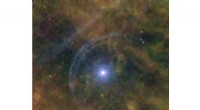
A protostar forms within a nebula, where gravity pulls hydrogen, helium, and dust together. The initial core heats as mass accumulates.
When core temperatures reach about 10 million K, hydrogen fusion ignites, turning the protostar into a true star.
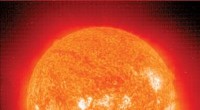
During this long phase, nuclear fusion balances gravitational collapse. Our Sun will stay here for roughly 10 billion years.
After hydrogen is exhausted, the core contracts and heats, causing the outer layers to expand dramatically—potentially engulfing Earth.
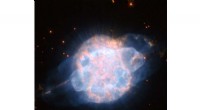
The outer envelope is expelled, forming a glowing shell around the hot core.
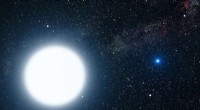
What remains is a dense, Earth‑sized core that cools over billions of years, emitting faint residual heat.
For more detailed information, see the NASA overview of stellar evolution.