By Micah McDunnigan | Updated Aug 30, 2022
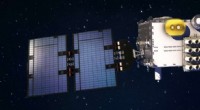
Space has fascinated humanity since antiquity. With the advent of rocket technology, we can now send unmanned probes beyond our planet, enabling scientific discovery without risking human life.
Image credit: Ingram Publishing / Getty Images.
Compared to crewed missions, unmanned probes are significantly cheaper because they eliminate life‑support systems, habitat design, and safe re‑entry capabilities. This cost advantage allows agencies to conduct more missions within constrained budgets.
Probes can approach the Sun, traverse the outer planets, and even leave the solar system—tasks impossible for astronauts. Missions such as Voyager 1 and 2 have ventured beyond Neptune, with Voyager 1 now traveling through interstellar space and relaying data back to Earth.
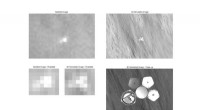
Unlike humans, probes cannot adapt to unforeseen problems. Programming errors or hardware failures can end a mission before launch. The 1999 Mars Climate Orbiter incident—caused by a unit‑conversion mismatch between NASA’s and JPL’s teams—illustrates how a single oversight can destroy a costly endeavor. For more details, see the official Mars Climate Orbiter page.
While probes deliver valuable science, they rarely spark the same public enthusiasm as crewed flights. Funding for space agencies is heavily influenced by public interest; without the dramatic appeal of human exploration, budget cuts become more likely.