Johan63/Getty Images
On Earth, we commonly refer to a day as lasting 24 hours, or 86 400 seconds. That figure reflects the average interval between successive solar noons—what astronomers call a solar day. In practice, the exact length of a solar day varies from one moment to the next.
One of the key reasons for this variation is the difference between a solar day and a sidereal day. A sidereal day is the time Earth takes to rotate 360° relative to the fixed stars. Because Earth also orbits the Sun, it must rotate an extra degree (361°) before the Sun returns to the same position in the sky. A mean sidereal day therefore lasts 23 hours, 56 minutes, and 4.091 seconds—86 164.091 seconds in total.
In addition, Earth’s orbital speed is not constant. The planet moves fastest at perihelion (early January, the closest approach to the Sun) and slowest at aphelion (early July, the farthest point). The combined effect of this varying velocity and the gravitational tug of the Moon causes the length of a solar day to shift by a few seconds each day. Only four days a year measure exactly 86 400 seconds; on all other days the length differs by ±4 seconds.
Mark Garlick/science Photo Library/Getty Images
Rotation periods differ dramatically across the planetary family. Mercury’s slow spin makes its day last about 5.068 million seconds (roughly 58.6 Earth days). Venus rotates in the opposite direction, taking around 19.44 million seconds for a full spin—about 20.99 million seconds of solar time because its retrograde rotation adds extra time between successive solar noons. Mars, meanwhile, enjoys a day of 88 560 seconds, only slightly longer than Earth’s.
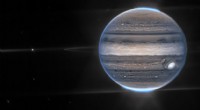
Beyond the asteroid belt, the gas giants spin at a blistering pace. Jupiter completes one rotation in roughly 35 700 seconds, giving it the shortest day in the system. Its modest axial tilt of 3° keeps the planet nearly upright. Saturn’s day lasts about 37 980 seconds, only about 2.3 times longer than Earth’s. Uranus turns 1.75 times slower than Jupiter, requiring about 62 040 seconds for a full rotation; its dramatic 97.77° axial tilt means it rolls on its side. Neptune, the outermost planet, has a day of about 57 600 seconds—roughly 1.5 times faster than Earth’s.