Joebelanger/Getty Images
Since the release of the James Webb Space Telescope’s spectacular images on July 12, 2022, public interest in astronomy has surged. While the JWST dominates headlines, a network of ground‑based observatories quietly fuels the next generation of discoveries. Among them, Hawaii’s W.M. Keck Observatory stands as the most scientifically productive facility on Earth.
Keck’s success is not the result of a local government agency but of a partnership between the California Association for Research in Astronomy (CARA), the University of California, and the California Institute of Technology. These institutions collaborate with the Keck Foundation and NASA to support cutting‑edge research.
Keck operates two identical telescopes whose combined power makes it the largest reflecting telescope in the world. Each telescope is equipped with a 10‑meter primary mirror composed of 36 hexagonal segments that are aligned with extraordinary precision.
Corbis/Getty Images
The mirror segments are so smooth that, if scaled to Earth’s diameter (7,926 miles or 12,760 km), the surface irregularities would rise no more than three feet. Sensors and actuators adjust each segment’s position to within four nanometers—roughly 1/25,000 the width of a human hair—creating a seamless, ultra‑reflective surface.
In 1999, Keck became the first observatory to install a large‑scale adaptive‑optics (AO) system, reshaping a deformable mirror 2,000 times per second to counter atmospheric turbulence. This innovation allows Keck to capture near‑infrared images with clarity that rivals, and in some cases surpasses, the Hubble Space Telescope.
Keck’s suite of instruments—such as the Keck Cosmic Web Imager, a spectrograph and imager used to map gaseous connections between galaxies—has led to significant scientific breakthroughs. The instrument’s role in locating non‑repeating fast radio bursts earned Keck astronomers John O’Meara and J. Xavier Prochaska the 2020 American Association for the Advancement of Science Newcomb Cleveland Prize.
Joe Mcnally/Getty Images
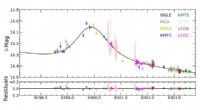
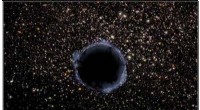
Keck’s instruments continue to push the boundaries of astrophysics. In November 2022, data from Keck’s High‑Resolution Echelle Spectrometer and Echellette Spectrograph and Imager contributed to the discovery of Gaia BH1, the nearest known black hole to Earth.
March 2024 saw Keck astronomers identify the faintest, potentially dark‑matter‑dominated system orbiting the Milky Way: Ursa Major III / UNIONS 1 (UMa3/U1). This ancient star cluster—or possibly a satellite galaxy—offers new insights into dark matter distribution and satellite galaxy formation, and may represent a previously unclassified class of stellar systems.
Beyond discoveries, Keck is refining its technical and logistical infrastructure to better capture transient events such as supernovae and gamma‑ray bursts, enabling rapid response and deeper scientific returns.
For more on exotic cosmic phenomena, read our guides on blazars vs. quasars and the composition of a black hole.