While daily risks like climate change and travel are familiar, the dangers that come from beyond our planet deserve equal attention. Modern science monitors and plans for these celestial hazards, ensuring we’re not blindsided by events that could threaten life and property on Earth.
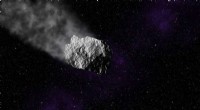
Asteroids—remnants from the early Solar System—range from meter‑sized specks to the 330‑mile‑wide Vesta. NASA and international partners catalogue most of the larger bodies, such as Apophis, Eros, and Psyche. When fragments enter the atmosphere, they usually burn up as harmless meteors, but a sizeable rock could trigger ground explosions, tsunamis, and long‑term ecological damage. Current detection systems give us advanced warning and time to develop deflection strategies, and recent research shows that a planet‑wide collision is extremely unlikely in the near future.
Comets, composed of ice and dust, rarely pass close to Earth. Their high velocities and larger sizes mean a collision would be far more destructive than an asteroid impact. Statistically, a comet strike is estimated once every 10 million years, but agencies like the U.S. Geological Survey’s Astrogeology Science Center continuously track potential intruders and model defensive options.
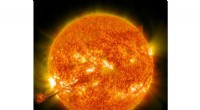
Coronal mass ejections (CMEs) and solar flares can generate magnetic storms that disrupt power grids and communications. The Carrington Event of 1859 and the 1989 Quebec blackout illustrate the potential severity. With our growing dependence on electricity and satellites, a severe geomagnetic storm could cause widespread outages and safety hazards. While we cannot stop solar activity, resilient infrastructure and backup power are key mitigations.
GRBs are the universe’s most powerful explosions, classified as short or long based on their progenitors—neutron‑star mergers or massive‑star collapses. The nearest recorded burst lies roughly 100 million light‑years away, and the lethal radius is confined to within a few hundred light‑years. Consequently, the immediate threat to Earth is negligible, though GRBs continue to intrigue researchers about their role in cosmic evolution.
Decades of launches have created a “cosmic junkyard” of spent rockets, defunct satellites, and fragmentation debris. Though the odds of a direct hit are astronomically low—about 1 in 1 trillion—the cumulative risk to active satellites, space stations, and future missions is real. Ongoing efforts focus on debris removal, passive mitigation, and stricter launch guidelines.
The commercial spaceflight boom introduces new environmental impacts, notably increased rocket‑fuel emissions and potential black‑carbon deposition in the upper atmosphere. These changes could strain climate resilience and affect agriculture. Companies are exploring reusable rockets, low‑emission propulsion, and carbon‑offset programs to reduce the ecological footprint of space tourism.
In summary, while many space‑borne threats remain remote, vigilant monitoring and proactive mitigation keep Earth safe. Scientists worldwide collaborate to refine detection, response, and policy, ensuring our planet remains protected from the cosmos.