Adastra/Getty Images
Across the cosmos, mysteries far outweigh what we can observe from Earth. While dazzling supernovae and shimmering constellations capture the eye, the deepest questions often reside in the chemistry of the interstellar medium.
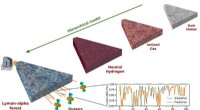
Between stars lies the interstellar medium, a vast expanse of gas dominated by hydrogen, followed by helium. Helium, a noble gas, traditionally is viewed as inert on Earth because it does not form bonds under ordinary conditions. However, the physics of space differs, allowing helium and other noble gases to participate in reactions that are impossible on our planet.
Thom Leach / Science Photo Library/Getty Images
In the periodic table, the rightmost column—Group 18—houses the noble gases: helium, neon, argon, krypton, xenon, radon, and the synthetic oganesson. While the first six occur naturally on Earth, oganesson remains a laboratory curiosity, discovered only in 2002. Noble gases possess filled valence shells, rendering them reluctant to share or donate electrons. Yet, in the low‑density, high‑energy environment of space, ionizing radiation can strip electrons, enabling otherwise inert atoms to bond.
NASA images/Shutterstock
The launch of ESA’s Herschel Space Observatory in 2009 enabled astronomers to detect the first noble‑gas molecule beyond Earth. By measuring infrared emission at 485 µm toward the Crab Nebula, scientists identified argonium (ArH⁺), a protonated argon‑hydrogen complex. The ionization of argon by cosmic rays supplies the necessary electron deficiency for the bond to form. Intriguingly, this molecule incorporates a different argon isotope than the one dominating Earth’s atmosphere.
Helium hydride (HeH⁺) has long been hypothesized as the Universe’s inaugural molecule. Formed from the two most abundant primordial elements—hydrogen and helium—this ion would have appeared shortly after the Big Bang. The first observational confirmation came in 2019, when a study published in Nature reported HeH⁺ in a planetary nebula located 3,000 light‑years away.