Science fair projects are a cornerstone of middle‑school science, but they also offer valuable hands‑on learning for elementary students. Even second‑graders can benefit from the curiosity‑driven format, turning textbook concepts into tangible demonstrations. Because the solar system is a standard part of the curriculum in many states—and because kids are naturally fascinated by planets and stars—solar‑system projects provide an engaging way to showcase knowledge and develop research skills.
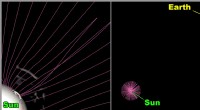
Creating a three‑dimensional model is a classic, age‑appropriate project. Second‑graders can start with a pre‑assembled kit or, for a more creative challenge, purchase foam balls of varying sizes from a craft store. By arranging the spheres around a central “Sun” and labeling each planet, students demonstrate an understanding of planetary order, relative sizes, and orbital motion.
Many state standards introduce moons as natural satellites. Students can choose a planet—Mars, for example—and research its moons. A science board or poster should detail each satellite’s name, size, and orbital characteristics. For added visual impact, a simple model of the planet with its moons in orbit helps illustrate gravitational relationships.
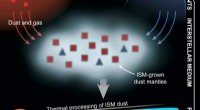
While the Sun is the primary focus in second‑grade curricula, learners can extend their studies to other stars. With guidance, a student might compare the Sun’s color, temperature, and distance to a nearby star, or explore a star type such as a red dwarf or blue giant. An optional project could trace a star’s life cycle from nebula to main‑sequence star and beyond.
Second‑graders often learn to compare Earth with the other planets. An individual planet study allows a child to analyze key attributes—atmospheric composition, surface temperature, water presence, and orbital distance—and reflect on how those factors might support—or preclude—life. Speculative discussion of extraterrestrial habitability can spark critical thinking and deeper inquiry.
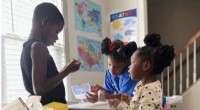
Unlike high‑school fair projects, second‑grade solar‑system work focuses on question‑driven research rather than hypothesis testing. Students formulate a clear question, gather facts from books or reputable online sources, and present their findings—usually through a poster, model, or oral report. No experiments are required, but the research process builds essential skills in reading comprehension, organization, and communication.