Pike-28/Shutterstock
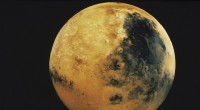
On Earth, snow is formed from frozen water crystals, but on Mars the situation is far more dramatic. The planet’s atmosphere is thinner than Earth’s by a factor of over 100 and contains only 0.13 % oxygen compared to Earth’s 21 %. Yet, despite these harsh conditions, the Red Planet does experience snowfall—albeit in a form that is entirely different from the familiar white flakes we see here.
Water ice can indeed form in the Martian atmosphere, but the combination of a thin air column and extreme cold causes these ice crystals to sublimate before they reach the surface. As a result, the surface rarely hosts any water‑based snow. However, NASA’s orbiters—particularly the Mars Reconnaissance Orbiter and the MAVEN spacecraft—have repeatedly imaged dune fields blanketed in what is unmistakably dry‑ice snow.
Unlike Earth’s snow, Martian snow is not composed of frozen water but of frozen carbon dioxide, commonly known as dry ice. When the ambient temperature drops below –78.5 °C (–109.3 °F), CO₂ condenses directly from a gas into a solid, bypassing a liquid phase. In the coldest regions of Mars, temperatures can plummet to –153 °C (–243 °F), providing the ideal environment for CO₂ snow to accumulate.
Ximushushu/Getty Images
Mars’s axial tilt is approximately 25.2°, nearly two degrees greater than Earth’s. Coupled with the planet’s longer orbital period, this tilt gives rise to more pronounced seasonal shifts. A Martian winter can last up to 687 Earth days, during which the planet’s thin atmosphere loses much of its retained heat, causing surface temperatures to descend dramatically.
During the coldest months, temperatures on the planet’s surface can reach as low as –153 °C (–243 °F), far colder than Antarctica’s record of –89.4 °C (–128 °F). These frigid conditions allow CO₂ to freeze from the atmosphere and settle on the ground as a fine, cube‑shaped layer of dry ice. Scientists estimate that during winter, up to one‑third of the planet’s atmospheric CO₂ condenses, forming a two‑foot (≈0.6 m) thick layer over the polar caps.
While the exact appearance of Martian snowflakes remains largely theoretical—given the absence of direct observations—the unique molecular arrangement of CO₂ suggests that these flakes would be microscopically small and distinctly cubic, in contrast to the dendritic structure of terrestrial snow.