Mark Garlick/science Photo Library/Getty Images
For centuries, humans have woven the planets into calendars, myths, and horoscopes. Yet, we are only beginning to truly understand these celestial neighbors. While we officially recognize eight planets today, ongoing research suggests there may be more bodies beyond our current sight. Our definition of a planet has also evolved—once encompassing ten planets before Pluto and Eris were reclassified as dwarf planets.
The eight recognized planets fall into two clear groups. The inner quartet—Mercury, Venus, Earth, and Mars—are terrestrial, boasting solid, rocky surfaces. The outer quartet—Jupiter, Saturn, Uranus, and Neptune—are Jovian giants, far larger but less dense because they are composed largely of gases and ices. Between these two families lies the asteroid belt, a ring of rocky remnants that neatly separates the terrestrial and giant worlds.
Proximity to Earth generally dictates the depth of our knowledge. Inner planets like Mercury and Venus are charted in detail, while our understanding of the outermost worlds, Uranus and Neptune, remains largely theoretical. Below is a concise overview of each planet’s most notable attributes.
Nasa/Getty Images
Mercury orbits the Sun at an average distance of 36 million miles, earning it the title of the planet closest to our star. Its orbital speed tops the solar system at 29 miles per second, completing a full revolution in just 88 Earth days. However, Mercury’s rotation is sluggish; a single Mercurian day lasts 58 Earth days.
By surface area, volume, and diameter, Mercury is the smallest planet, with a radius of 1,516 miles—only slightly larger than Earth’s Moon. It is the second densest planet, largely due to its massive metallic core.
Mercury’s atmosphere is virtually nonexistent; its thinness is a consequence of the planet’s low mass and the relentless bombardment of solar wind. Without an atmosphere to retain heat, surface temperatures swing wildly—from 800 °F during daylight to -290 °F at night.
Artsiom P/Shutterstock
Venus, the second planet from the Sun, averages 67 million miles in distance. Its year spans 225 Earth days, but its day is 243 Earth days long—making it the only planet where a day exceeds a year. Venus rotates in a retrograde direction, so the Sun rises in the west and sets in the east.
Named after the Roman goddess of love, Venus is Earth’s “twin” in size, with an equatorial radius of 3,760 miles versus Earth’s 3,963 miles. Its atmosphere is a dense blanket of 96% carbon dioxide, producing a runaway greenhouse effect that locks the planet in extreme heat, averaging 870 °F on the surface.
Roberto Machado Noa/Getty Images
Earth, the third planet from the Sun, is the largest of the terrestrial planets and the densest in the solar system. Its orbital speed is 67,100 miles per hour, completing a full orbit in 365.25 days—necessitating the leap day every four years.
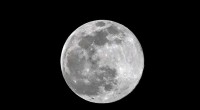
Earth’s single natural satellite, the Moon, is the largest moon relative to its planet in the solar system. The Moon’s gravitational pull stabilizes Earth’s axial tilt, maintaining a stable climate essential for life.
Earth is unique for harboring life, with a nitrogen‑oxygen atmosphere and 71% surface water. Over 1.7 million species have been identified, and more than 10,000 new species are described annually.
Esa/michael Benson/Getty & undefined
Mars, the fourth planet, has a radius of 2,106 miles—roughly half Earth’s size. A Martian day, or sol, lasts 24.6 hours, slightly longer than Earth’s. A Martian year equals 669.6 sols, or about 687 Earth days.
Named after the Roman god of war, Mars’ reddish hue comes from iron oxide in its soil. Mars hosts two small moons, Phobos and Deimos, likely captured asteroids.
Extensive rover missions have provided a wealth of imagery and data, revealing ancient riverbeds and the possibility of past or present microbial life beneath its icy subsurface.
Claudio Caridi/Shutterstock
Jupiter, the fifth planet, dominates the solar system with a mass exceeding the combined mass of the other seven planets. Its diameter is 11 times Earth’s, and its volume surpasses Earth’s by 1,300×.
Composed mainly of hydrogen and helium, Jupiter’s deep atmosphere turns hydrogen into liquid under extreme pressure, creating the largest “ocean” in the solar system. Its atmosphere displays colorful bands formed by swirling clouds, and its Great Red Spot is a colossal anticyclonic storm larger than Earth.
Jupiter completes a rotation every 9.9 hours, the shortest day in the system, yet its year lasts 12 Earth years. Its immense gravity has captured 95 known moons.
Nasa/jpl/space Science Institute/michael Benson/Getty Images
Saturn, the sixth planet, is second only to Jupiter in size. Its diameter is nine times that of Earth, and its volume is 760× larger, yet it is the least dense planet—less dense than water.
Saturn’s iconic rings comprise thousands of particles from dust to mountain-sized chunks, remnants of shattered moons and cometary debris. The rings are made of ice and rock and orbit in a plane perpendicular to the planet’s axis.
Saturn boasts 146 known moons; its largest, Titan, is the only other world in the solar system (besides Earth) known to have liquid rivers and seas, making it a prime candidate in the search for life.
Claudio Caridi/Shutterstock
Uranus, the seventh planet, is the third largest by diameter but only the fourth largest by mass, making it lighter than Neptune. Unlike the gas giants, Uranus is an ice giant, composed of heavier elements like oxygen, nitrogen, carbon, and sulfur.
Its axis is tilted at an extreme 97.77°, causing it to rotate almost on its side. This unique orientation results in the most extreme seasonal variations in the solar system, with 21‑year‑long polar winters.
Discovered by William Herschel in 1781, Uranus has 28 moons and two sets of rings, all orbiting within the planet’s axial plane.
Heritage Images/Getty Images
Neptune, the eighth planet, lies an average of 2.8 billion miles from the Sun. A Neptune year lasts 165 Earth years, with each season extending beyond 40 Earth years. The planet’s atmosphere contains methane, giving it a deep blue appearance.
Neptune is the densest of the ice giants, despite being the smallest in diameter and second smallest in mass. Its internal structure is largely mysterious, with some theories proposing a boiling ocean beneath the atmosphere.
Neptune’s existence was predicted before it was observed, thanks to the perturbations it caused in Uranus’s orbit. Astronomers Le Verrier and Adams calculated its position in 1845, and it was confirmed by telescope the following year.