In late March 2025, residents of South Dakota, Wisconsin, and Minnesota were treated to an uncommon sight: the northern lights glowing across the night sky. The aurora borealis, normally confined to high‑latitude regions, appeared this time thanks to a geomagnetic storm—a period of heightened solar activity that can produce spectacular auroral displays.
While many celebrate these stunning displays, geomagnetic storms also carry the potential to disrupt modern civilization. The storms occur when solar wind—streams of charged particles ejected from the sun—collide with Earth’s magnetic field. Their intensity ranges from mild to extreme, depending on the strength and speed of the incoming particles. The most severe storms are typically driven by coronal mass ejections (CMEs), violent eruptions of solar plasma that travel through space at incredible speeds.
Although most storms pass unnoticed, the most powerful ones can significantly affect our way of life—from satellite malfunctions to widespread power outages, and even heating the Earth’s upper atmosphere. It’s a reminder that the same solar energy that paints the sky also powers the technology we rely on.
The solar energy that creates auroras also threatens the infrastructure of modern society. When a strong geomagnetic storm strikes, it can induce electrical currents in power grids and pipelines, interfere with satellite and radio navigation systems, and even confuse migratory birds and marine mammals.
One of the most infamous incidents occurred in March 1989, when a powerful solar storm knocked out the entire power grid in Quebec, Canada, leaving over six million people without electricity for nine hours. Across North America and parts of Europe, power grids surged and damaged critical infrastructure; a transformer at a New Jersey nuclear plant was overloaded and destroyed.
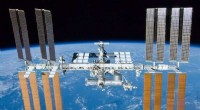
Today’s interconnected grid and space‑based assets make us even more vulnerable. Satellites, for example, can experience increased atmospheric drag when the upper atmosphere heats up during intense storms, potentially lowering their orbits. NOAA’s Space Weather Prediction Center rates these events on a five‑point “G” scale, from G1 (minimal impact) to G5 (catastrophic). A G3 storm is considered “strong” and can trigger navigation problems and auroras as far south as Oregon and Illinois. G5 storms can incapacitate satellites for days and cause widespread blackouts.
Governments and scientific agencies have stepped up efforts to monitor space weather and protect infrastructure. NASA’s Parker Solar Probe has been making close passes by the sun since 2018 to study solar wind and its particles in situ. The probe’s data helps improve our understanding of CME initiation and propagation.
Other missions monitor solar activity from Earth orbit. The joint ESA/NASA Solar and Heliospheric Observatory (SOHO) tracks the sun’s most active regions and sunspots, while NASA’s Solar Dynamics Observatory (SDO) observes the sun’s magnetic fields and plasma flows in unprecedented detail. NOAA’s Space Weather Prediction Center (SWPC) detects CMEs early and issues warnings to the public and industry.
CMEs are often preceded by an interplanetary shock that can provide 15–60 minutes of advance notice before the magnetic field reaches Earth—an invaluable window for operators to safeguard power grids, satellites, and communication systems.
While we have made significant progress, geomagnetic storms remind us of the immense power of the Sun and the need for continuous vigilance. As the Sun approaches its next solar maximum, we must remain prepared for events that could outstrip our current protective measures.