Ongoing research into the origins of life on Earth suggests that life may have arrived via extraterrestrial delivery, raising the possibility that habitable environments exist beyond our planet. Among the most promising candidates is the exoplanet K2‑18 b, where recent observations have yielded the strongest evidence for potential life to date.
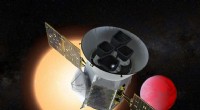
Using the James Webb Space Telescope (JWST), a team led by the University of Cambridge analyzed the atmosphere of K2‑18 b—located more than 120 light‑years from Earth. The results, published in The Astrophysical Journal Letters, revealed unusually high levels of dimethyl sulfide (DMS) and dimethyl disulfide (DMDS). On Earth, these sulfur‑bearing molecules are produced almost exclusively by microbial processes and are present at less than one part per billion. In contrast, the exoplanet’s atmosphere shows concentrations exceeding 10 parts per million, a dramatic enrichment that is difficult to explain without a biological source.
Earlier observations had hinted at a weak DMS signature in K2‑18 b’s atmosphere. Professor Nikku Madhusudhan of Cambridge’s Institute of Astronomy noted, “The prior signal was suggestive but inconclusive, prompting us to re‑observe with JWST’s Mid‑Infrared Instrument (MIRI).” The newer data, gathered with MIRI, provided a clearer and stronger detection.
The detection of DMS and DMDS is intriguing but does not constitute definitive proof of life. In the scientific community, a “potential biosignature” denotes a molecule that could plausibly originate from biological activity, yet requires additional evidence to rule out abiotic explanations. The current statistical assessment indicates a 0.3 % chance (≈ three‑sigma) that the observed signals could arise from non‑biological chemistry. To meet the stringent five‑sigma threshold (≤0.00006 %) required for a formal discovery, further observations and modeling are essential.
Professor Madhusudhan emphasized that this result constitutes an independent line of evidence, obtained with a distinct instrument and wavelength regime that does not overlap with prior data. “The signal is both robust and unambiguous,” he said, adding that when combined with the planet’s broader characteristics, a Hycean world—an ocean‑dominated planet with a hydrogen‑rich atmosphere—emerges as the most plausible scenario. He remains committed to additional studies that will clarify whether the detected sulfur compounds are truly biogenic or the product of alternative chemistry.
Similar caution applies to other potential biosignatures in the solar system. Microbial life, for instance, might lurk beneath Mars’s polar ice, while recent discoveries of subsurface water on Pluto’s moon Charon suggest that habitable niches could exist beyond the familiar planets.