Mars, our rocky neighbor, shares many features with Earth yet holds mysteries that set it apart. NASA’s MAVEN, Odyssey, Reconnaissance Orbiter, Perseverance, and Curiosity missions continually unveil discoveries that both confirm our expectations and challenge our imagination. These findings deepen our understanding of planetary evolution and pave the way for future crewed exploration.
On 24 Feb 2022, Curiosity photographed mineral formations in Gale Crater that resemble delicate coral or floral blooms. Though only a few millimetres across—smaller than a penny—these “mineral flowers” reveal the composition of ancient Martian waters and how they once flowed through the planet’s surface.
Curiosity captured a monochrome image on 7 May 2022 of a rectangular stone cleft on the Greenheugh Pediment. The feature, less than three feet high, appears doorway‑like but is the result of a boulder collapse and natural fracturing rather than an extraterrestrial portal.
In early 2018, Curiosity photographed tube‑shaped mineral deposits near Mount Sharp. While their shape sparked speculation about ancient life, current evidence points to crystallized minerals carried by past Martian waters, though definitive conclusions await more sensitive instruments.
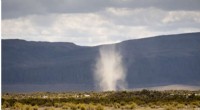
Perseverance filmed two dust devils colliding on 25 Jan 2025 near Witch Hazel Hill in Jezero Crater. The larger, 210‑foot‑tall vortex overtook the 15‑foot rival, showcasing the dynamic atmospheric processes that shape the Martian surface.
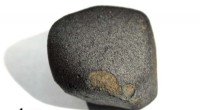
On 13 Mar 2025, Perseverance’s Mastcam‑Z photographed the gray, globule‑covered St. Paul’s Bay rock on Broom Hill. Its anomalous texture suggests a history of water erosion and sediment deposition, earning it the designation of a “float rock.”
In 1999, the Mars Global Surveyor imaged a 1.4‑mile‑wide heart‑shaped graben on the eastern flank of Alba Patera. The formation results from tectonic stresses and lava flow, not romance, yet it reminds us that planetary geology can appear eerily familiar.
In‑Sight’s magnetometer discovered patches near its landing site in 2020 that are ten times larger than any known on Earth and fluctuate daily. These anomalies arise from ancient magnetic rocks buried deep in Mars’ crust, offering clues to why the planet’s magnetic field vanished billions of years ago.
Since 2003, researchers have observed sprawling, spider‑like structures on Mars’ surface. The leading Kieffer Model attributes them to sublimating carbon‑dioxide ice, a phenomenon recently replicated in laboratory settings, deepening our understanding of Martian seasonal processes.
NASA’s MAVEN orbiter revealed that sputtering—high‑energy ions knocking atmospheric particles into space—drives Mars’ loss of water and atmosphere. This insight explains how the Red Planet transitioned from a wet world to its current arid state.
Perseverance captured a 3‑by‑2‑foot rock, Cheyava Falls, in July 2024. The white patches surrounded by black rings—resembling leopard spots—are tied to energy‑driven chemical reactions in hematite that may have fueled microbial life, as indicated by the detection of organic molecules.
Seismic data from InSight suggest a vast water reservoir 7–13 miles below the surface, potentially covering Mars with a mile‑deep layer of water. While drilling to this depth remains a technological challenge, the reservoir could host microbial ecosystems akin to Earth’s deep‑sea trenches.
Captured by Viking 1 in 1976, a rock formation on Mars presents a face‑like silhouette when viewed from a particular angle. The feature is an example of pareidolia—our brain’s tendency to recognise familiar shapes in random patterns—rather than evidence of alien artifacts.
Since the 1970s, the Viking 1 Orbiter documented elongated dark streaks on Martian slopes. Recent AI analyses indicate these are not water‑related but result from dry dust avalanches, offering insight into surface dynamics and dust transport on Mars.