Artsiom P/Shutterstock
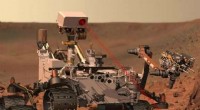
Scientific breakthroughs often emerge from unexpected moments. On May 30, 2024, NASA’s Curiosity rover rolled over a seemingly ordinary rock at the Gediz Vallis channel. The 1,982‑pound rover caused the stone to fracture, exposing a cluster of yellow‑green crystals that turned out to be pure sulfur.
This marks the first time that elemental sulfur—free of any mineral matrix—has been identified on Mars. Prior detections were limited to sulfates, the salt‑like compounds that form when sulfur reacts with water and later dries. The new find suggests Mars may share more Earth‑like geological processes than previously thought.
On Earth, sulfur is usually found in sulfate form, but pure crystals are produced by volcanic or hydrothermal activity. Curiosity’s discovery may illuminate the planet’s volcanic history and help explain why volcanic activity appears to have dwindled on the Red Planet. NASA scientists are currently scrutinizing the data to determine how these crystals formed.
The Gediz Vallis channel is a long incision carved into the flank of Mount Sharp, the 3.4‑mile‑tall mountain at the heart of Gale Crater. Mount Sharp’s stratified layers record a billion‑year record of Martian geology, but the rover cannot climb to the summit. The channel, however, is a natural conveyor belt that drops rocks from the ridge, granting Curiosity access to upper‑layer material without the need for a steep ascent.
Among the fallen rocks, Curiosity encountered the sulfur‑rich stone. Because the fragment descended from higher elevations, its exact stratigraphic context remains uncertain, yet its presence could hold clues to the planet’s past.
Every Martian discovery is examined through the lens of life’s potential. The Gediz Vallis channel itself is evidence of ancient water flow, and the detection of sulfates, now complemented by elemental sulfur, underscores the importance of sulfur for biochemistry. Sulfur is a fundamental component of proteins, essential for cellular signaling and antioxidant defense, and is present in all known life forms.
For astrobiology, sulfur is a key marker. Curiosity’s new finding adds weight to the hypothesis that Mars once possessed environments conducive to life. To fully grasp the significance, scientists need to investigate the formation pathways of these crystals. The channel is rich with similar rocks, and Curiosity’s work is just beginning.
buradaki/Shutterstock