Here's a breakdown:
* Ellipse: An ellipse is like a slightly squashed circle. It has two focal points.
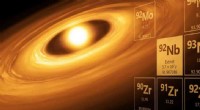
* Focus: The star that a planet orbits around is at one of the focal points of the ellipse.
* Orbit: The path the planet takes around the star is an ellipse.
Think of it like this:
1. Imagine a circle: If the planet's speed was constant and it was traveling at a uniform distance from the star, it would orbit in a perfect circle.
2. Now imagine the circle being squashed: This is what happens with an elliptical orbit. The planet's speed isn't constant, and it's closer to the star at some points in its orbit than others.
Key things to remember:
* Not perfectly circular: Planets don't orbit in perfect circles, but rather in ellipses.
* Gravity: Gravity is the force that keeps planets in their orbits. The star's gravity pulls on the planet, keeping it from flying off into space.
* Speed changes: A planet's speed changes as it orbits. It's faster when it's closer to the star and slower when it's farther away.
This is a simplified explanation, and there are many more factors that influence a planet's orbit. But hopefully, this gives you a basic understanding of how planets move through space!