1. Cosmic Rays:
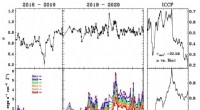
* Origin: These are highly energetic particles, mainly protons, originating from outside our solar system. Some are remnants of supernova explosions or active galactic nuclei.
* Intensity: The intensity of cosmic rays varies depending on your location in space. Areas further away from the sun and Earth have higher cosmic ray levels.
* Danger: These particles can penetrate deep into the human body and cause cell damage, increasing the risk of cancer.
2. Solar Flares and Coronal Mass Ejections (CMEs):
* Origin: These are massive bursts of energy and particles released from the sun.
* Intensity: The intensity and frequency of solar flares and CMEs vary with the sun's activity cycle. They can be very intense and pose a danger to astronauts and satellites.
* Danger: They can disrupt communication systems, damage satellites, and expose astronauts to dangerous radiation levels.
3. Galactic Cosmic Rays:
* Origin: These are cosmic rays originating from within our own galaxy, the Milky Way.
* Intensity: They are less intense than cosmic rays originating from outside the solar system.
* Danger: While less intense, they still pose a radiation hazard to humans in space.
4. Radiation Belts:
* Origin: Earth has two radiation belts, the Van Allen belts, trapped by its magnetic field.
* Intensity: These belts contain high levels of charged particles, mainly protons and electrons.
* Danger: They are a major hazard to spacecraft and astronauts transiting through them.
5. Background Radiation:
* Origin: This is a low level of radiation present everywhere in the universe, including Earth.
* Intensity: It's generally very low, but can still contribute to the total radiation exposure.
Why is space considered a high radiation environment?
While space is not uniformly irradiated, certain areas have high levels of radiation. This is because:
* Lack of Atmosphere: Earth's atmosphere protects us from most cosmic rays and solar radiation. In space, there's no such shield.
* Distance from Earth's Magnetic Field: The Earth's magnetic field deflects many charged particles, but its protection decreases as you move further away.
* Solar Activity: The sun's activity is not constant. Periods of high solar activity can lead to intense radiation bursts.
To summarize:
While space doesn't have uniformly high radiation levels, certain areas, especially outside the protection of Earth's atmosphere and magnetic field, are highly irradiated. This is due to various sources like cosmic rays, solar flares, and radiation belts. These factors pose significant challenges for human exploration and spacecraft operations.