Electromagnetic Radiation:
* Light: This includes visible light, infrared, ultraviolet, X-rays, and gamma rays. These are all forms of electromagnetic radiation, which are waves of energy that can travel through a vacuum at the speed of light.
* Radio Waves: These are also a form of electromagnetic radiation, and they can travel vast distances through space.
Particle Radiation:
* Neutrinos: These are subatomic particles with very little mass and no electric charge. They can easily penetrate matter and travel long distances through space.
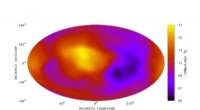
* Cosmic Rays: These are high-energy particles, mainly protons and atomic nuclei, that originate from outside our solar system. They can also travel through space.
How It Works:
* Electromagnetic Radiation: Electromagnetic radiation doesn't need a medium to travel. The waves are fluctuations in electric and magnetic fields that propagate through space.
* Particle Radiation: Particles like neutrinos and cosmic rays can travel through space because they are not affected by the lack of matter.
Key Points:
* No medium needed: Radiation doesn't need air or other matter to travel.
* Speed of light: Electromagnetic radiation travels at the speed of light in a vacuum.
* Vast distances: Radiation can travel vast distances, like from distant stars or galaxies to Earth.
Examples:
* Sunlight: The Sun's light travels through the vacuum of space to reach Earth.
* Cosmic microwave background radiation: This is a faint radiation that permeates the universe and provides evidence for the Big Bang.
* Neutrinos from the Sun: Neutrinos constantly travel through us, passing through our bodies without interacting.
Let me know if you would like more information on specific types of radiation.