Here's a breakdown:
* Gravity: This is a fundamental force of nature that attracts any two objects with mass. The more massive the objects, the stronger the gravitational pull between them. The closer the objects, the stronger the pull.
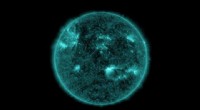
* The Sun's Gravity: The Sun is incredibly massive, making its gravitational pull the dominant force in our solar system. It holds all the planets in their orbits, preventing them from flying off into space.
Key Points about Gravity:
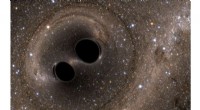
* Not just a "pull": Gravity is often depicted as a simple pull, but it's more accurately described as a warping of spacetime. Massive objects like the Sun distort the fabric of spacetime around them, causing objects to move towards them.
* Keeps planets in orbit: The Sun's gravity provides the centripetal force needed to keep planets in their orbits. This force is constantly pulling the planets inward, preventing them from moving in straight lines and instead causing them to follow elliptical paths.
* Not a constant force: The gravitational pull of the Sun on a planet changes slightly depending on the planet's distance from the Sun. The closer a planet is, the stronger the gravitational pull.
Let me know if you'd like to learn more about gravity, orbits, or anything related to the solar system!