Here's a breakdown:
* Earth's Lithosphere: This is the rigid outermost layer of Earth, consisting of the crust and the uppermost part of the mantle. It's broken up into tectonic plates that move and interact, leading to earthquakes, volcanoes, and mountain building.
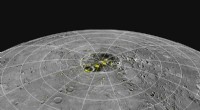
* Moon's Lithosphere: The Moon's lithosphere is much thicker than Earth's, encompassing the entire lunar crust and a significant portion of the lunar mantle. This is because the Moon has no plate tectonics. The Moon's lithosphere is also relatively cold and rigid, with very little internal heat.
Key Differences:
* Thickness: The Moon's lithosphere is significantly thicker than Earth's.
* Composition: While both lithospheres include crust, the Moon's lithosphere also includes a substantial portion of its mantle.
* Tectonics: The Moon lacks the plate tectonics that characterize Earth.
* Heat and Activity: The Moon's lithosphere is much colder and less active than Earth's.
Why it Matters:
Understanding the Moon's lithosphere is crucial for understanding its geological history and evolution. It also plays a role in understanding the Moon's surface features, like craters and highlands.