1. No Scattering:
* Atmosphere: Earth's atmosphere scatters sunlight, which is why we see a blue sky. This scattering also affects starlight, making it appear dimmer and less focused.
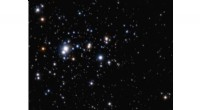
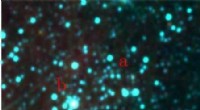
* Space: Without an atmosphere, there's no scattering. Starlight travels in a straight line, appearing as sharp points of light instead of diffused patches.
2. No Absorption:
* Atmosphere: The atmosphere absorbs certain wavelengths of light, which is why we see sunsets in red and orange hues. Starlight also experiences some absorption.
* Space: In space, there's minimal absorption, allowing most wavelengths of starlight to reach our telescopes unhindered. This means we can observe a broader range of colors and study the composition of stars more accurately.
3. Clear View:
* Atmosphere: The atmosphere can be filled with clouds, dust, and pollutants, obscuring our view of space.
* Space: Space offers an unobstructed view, allowing for much clearer and more detailed observation of celestial objects.
4. Twinkling:
* Atmosphere: The twinkling of stars is caused by the bending of light as it passes through different layers of air with varying densities.
* Space: Stars don't twinkle in space because there's no atmosphere to distort their light.
In summary:
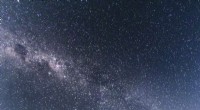
The absence of an atmosphere in space creates a pristine environment for observing starlight. It eliminates scattering and absorption, allowing for clearer, sharper, and more detailed observations. This is why telescopes in space are so valuable for astronomy research.