1. Scattering:
* Rayleigh Scattering: When light encounters particles much smaller than its wavelength (like dust particles), it gets scattered in all directions. This is why the sky appears blue during the day – blue light is scattered more efficiently than other colors.
* Mie Scattering: As dust particles get larger, Mie scattering becomes more prominent. This scatters light less efficiently than Rayleigh scattering, and the scattered light tends to be more forward-directed.
2. Absorption:
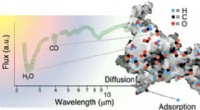
* Dust particles absorb some of the light that hits them. The amount of absorption depends on the composition of the dust (e.g., minerals, organic matter). This absorption can affect the color of the light that passes through the cloud.
3. Attenuation:
* Both scattering and absorption contribute to the overall attenuation of light. The more dust there is, the more light is scattered and absorbed, and the less light reaches the observer. This is why sunsets appear red – the blue light is scattered away, leaving the longer wavelengths (red and orange) to dominate.
4. Polarization:
* As light interacts with dust particles, it becomes partially polarized. This means the light waves vibrate more strongly in one direction than others. This polarization can be used to study dust clouds and their properties.
Effects on Observations:
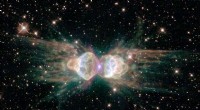
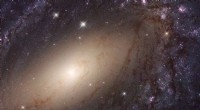
* Astronomical observations: Dust clouds can obscure distant objects, making them difficult to observe. Astronomers use techniques like infrared observations (which are less affected by dust) to study objects behind dust clouds.
* Weather: Dust clouds can affect visibility, making it difficult to see far away. They can also affect the amount of sunlight reaching the ground, leading to cooler temperatures.
In summary: Even thin clouds of dust have a significant impact on light passing through them, causing scattering, absorption, attenuation, and polarization. These effects can be observed in various ways, from the color of the sky to the visibility of distant objects.