1. First Servicing Mission (December 1993):
* The Problem: The telescope's primary mirror had a manufacturing error, resulting in blurry images.
* The Fix: Astronauts installed corrective optics (called COSTAR) to compensate for the mirror flaw. This mission effectively "fixed" Hubble's vision.
2. Second Servicing Mission (February 1997):
* The Problem: A gyroscope (used for pointing the telescope) had failed. The telescope needed new instruments and additional capabilities.
* The Fix: Astronauts replaced the gyroscope, installed a new instrument (the Space Telescope Imaging Spectrograph), and upgraded other systems.
3. Third Servicing Mission (December 1999):
* The Problem: More gyroscopes failed, and the telescope needed further upgrades.
* The Fix: Astronauts replaced the gyroscopes, installed a new camera (the Advanced Camera for Surveys), and upgraded other systems.
4. Fourth Servicing Mission (May 2009):
* The Problem: Several instruments were failing, and the telescope needed a major overhaul.
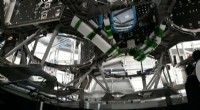
* The Fix: This was the final servicing mission, astronauts installed two new instruments (Wide Field Camera 3 and the Cosmic Origins Spectrograph), replaced the telescope's batteries, and upgraded other systems. They also installed a new gyroscope and a new Fine Guidance Sensor.
Why No More Servicing Missions?
The Hubble Space Telescope is in a very high orbit, requiring a specialized space shuttle to reach it. The Space Shuttle program was retired in 2011, making further in-space servicing impossible.
What's Next for Hubble?
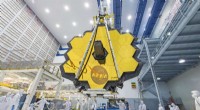
Hubble continues to operate today, but it's expected to eventually reach the end of its lifespan. However, it's still producing groundbreaking images and scientific discoveries. The James Webb Space Telescope, launched in 2021, is a successor to Hubble and is designed to see even further into the universe.