* Gravity: Every object in the universe has gravity, which is a force that pulls objects towards each other. The more massive an object, the stronger its gravitational pull.
* Motion: For an object to orbit another, it needs to be moving at a certain speed. If it's moving too slowly, it'll be pulled directly towards the larger object. If it's moving too fast, it'll escape the gravitational pull entirely.
* Balance: The key to an orbit is finding the right balance between the object's motion and the gravitational pull. This balance results in a curved path around the larger object, rather than a straight line towards it.
Types of Orbits:
There are various types of orbits depending on their shape and characteristics:
* Circular Orbits: A perfect circle around a central object.
* Elliptical Orbits: An oval-shaped path, where the object is closer to the central object at some points and farther at others.
* Geostationary Orbits: A special type of circular orbit where the object appears stationary from a specific point on Earth.
* Polar Orbits: Orbits that pass over the Earth's poles.
Examples of Orbits:
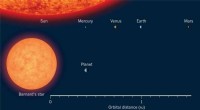
* Planets orbiting the Sun: Our solar system's planets, including Earth, are in elliptical orbits around the Sun.
* Satellites orbiting Earth: Artificial satellites, such as communication satellites, weather satellites, and GPS satellites, are in orbits around Earth.
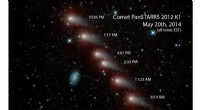
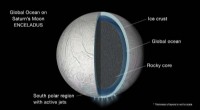
* Moons orbiting planets: The Moon orbits Earth, and other moons orbit planets like Jupiter and Saturn.
Understanding orbits is essential for:
* Space exploration: For launching and maneuvering spacecraft, understanding orbits is crucial.
* Communication and navigation: Satellites rely on orbits to provide communication, GPS signals, and other services.
* Astronomy: Studying orbits helps us understand the movement of celestial bodies and their interactions.
Let me know if you'd like to explore any specific aspects of orbits further!