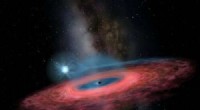
* Stars are incredibly far apart: The vast distances between stars make collisions incredibly rare. Think of the night sky – all those stars you see are incredibly far away.
* Stars are massive: Stars are much larger and more massive than planets. They exert a strong gravitational pull, making it difficult for them to be pulled off course and towards a planet.
* Gravity and orbits: Stars and planets are held in place by gravity, orbiting around each other in a balanced system. This makes it even more difficult for a star to suddenly deviate and crash into a planet.
What can happen instead:
* Close encounters: Stars can get close to each other, but they usually just pass by each other. These close encounters can be dramatic, influencing the orbits of planets in their systems.
* Supernovae: When stars reach the end of their lives, they can explode in a supernova. This explosion can send shockwaves through space, potentially affecting nearby planets, but it's unlikely to cause a direct collision.
In conclusion: While a star colliding with a planet is theoretically possible, it's incredibly unlikely. The vast distances between stars, their massive size, and the influence of gravity all work against such an event happening.