Here's a breakdown of different types of telescopes and what they're used for:
* Optical Telescopes: These are the most common type, and they use lenses or mirrors to gather and focus visible light. They can be used to observe planets, stars, galaxies, and other celestial objects.
* Radio Telescopes: These telescopes collect radio waves emitted by celestial objects. They can be used to study objects that are too cold or faint to be seen with optical telescopes, such as the early universe or the interiors of stars.
* Infrared Telescopes: These telescopes detect infrared radiation, which is emitted by warm objects. They can be used to study planets, stars, and other objects that are hidden from view by dust and gas.
* Ultraviolet Telescopes: These telescopes detect ultraviolet radiation, which is emitted by hot objects. They can be used to study the atmospheres of planets, stars, and galaxies.
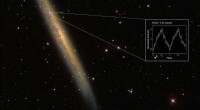
* X-ray Telescopes: These telescopes detect X-rays, which are emitted by extremely hot objects. They can be used to study black holes, neutron stars, and supernova remnants.
* Gamma-ray Telescopes: These telescopes detect gamma rays, which are the most energetic form of electromagnetic radiation. They can be used to study the most violent events in the universe, such as supernova explosions and active galactic nuclei.
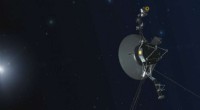
In addition to telescopes, scientists also use spacecraft to study planets. Spacecraft can get much closer to planets than telescopes on Earth can, and they can carry a variety of instruments to study the planets' atmospheres, surfaces, and interiors.
Ultimately, the specific instrument used to observe a planet depends on the scientific goals of the researchers.