Planets
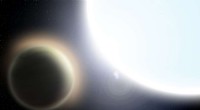
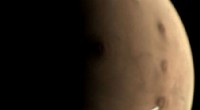
* Definition: A celestial body that orbits a star, is massive enough for its own gravity to pull it into a roughly spherical shape, and has cleared its neighborhood of other objects.
* Characteristics:
* Do not emit their own light (they reflect light from their star).
* Vary greatly in size and composition.
* Some planets have moons.
* Examples: Earth, Mars, Jupiter, Saturn
Stars
* Definition: A giant ball of hot gas that produces its own light and heat through nuclear fusion in its core.
* Characteristics:
* Emit light and heat due to nuclear reactions.
* Come in different sizes, colors, and temperatures.
* Have a finite lifespan.
* Examples: The Sun, Sirius, Polaris
Moons
* Definition: A natural satellite that orbits a planet.
* Characteristics:
* Do not emit their own light (they reflect light from their star or planet).
* Come in different sizes and compositions.
* Some moons have atmospheres or even active geology.
* Examples: Earth's Moon, Jupiter's moons (Io, Europa, Ganymede, Callisto)
The Sun
* Definition: The star at the center of our solar system.
* Characteristics:
* A large, hot, yellow star.
* Provides light and heat to Earth and other planets in our solar system.
* Holds the solar system together through its gravity.
In Summary:
* Planets orbit stars and are smaller and cooler than stars.
* Stars are giant balls of hot gas that emit light and heat through nuclear fusion.
* Moons orbit planets and are smaller and colder than planets.
* The Sun is the star at the center of our solar system, providing light and heat to Earth.