1. Gravity's Role:
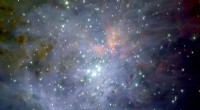
* Formation: Stars are born from giant clouds of gas and dust called nebulae. Gravity pulls these particles together, causing the cloud to collapse and heat up.
* Nuclear Fusion: As the cloud collapses, the core becomes incredibly hot and dense. At a certain point, the pressure and temperature become so extreme that nuclear fusion begins. This is the process where hydrogen atoms fuse to form helium, releasing enormous amounts of energy that create the star's light and heat.
* Balancing Act: The outward pressure from nuclear fusion fights against the inward pull of gravity, creating a stable equilibrium. This is what keeps the star alive.
2. Other Key Forces:
* Nuclear Reactions: As hydrogen fuel is consumed, stars progress through different stages of nuclear fusion, burning heavier elements like helium, carbon, and oxygen. These reactions influence a star's luminosity, temperature, and lifespan.
* Internal Pressure: The energy released from nuclear fusion creates outward pressure, which helps to balance the inward pull of gravity.
* Radiation Pressure: The energy released from the star's core also exerts a outward pressure through radiation, further contributing to the balance against gravity.
3. Stellar Evolution Stages:
The interplay of these forces determines the life cycle of a star:
* Protostar: The initial collapsing cloud of gas and dust.
* Main Sequence: The longest stage, where the star is fusing hydrogen into helium. Our Sun is currently in this stage.
* Red Giant: As hydrogen fuel runs low, the core contracts, heating the outer layers and expanding the star.
* Later Stages: Depending on the star's mass, it may go through various stages of burning heavier elements, leading to white dwarf, neutron star, or black hole formation.
4. Stellar Mass and Evolution:
A star's mass is the most crucial factor determining its evolution.
* Massive stars: Burn through their fuel much faster and have shorter lifespans. They evolve more rapidly and end their lives in spectacular supernova explosions.
* Smaller stars: Have longer lifespans and evolve more slowly, ending their lives as white dwarfs.
In essence, stellar evolution is a dynamic interplay between gravity, nuclear fusion, and internal pressure. These forces govern the birth, life, and death of stars, shaping the universe as we know it.