1. Observing Distant Objects:
* Galaxies and Nebulae: Hubble's sharp vision allows it to see incredibly distant galaxies and nebulae, giving us insights into the early universe and the formation of stars and planets.
* Supernovae: It observes supernova explosions, helping astronomers understand stellar evolution and the expansion of the universe.
* Black Holes: Hubble provides evidence for the existence of black holes by capturing images of their gravitational influence on surrounding matter.
2. Studying Planets in Our Solar System:
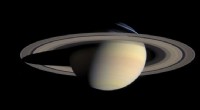
* Planetary Atmospheres: Hubble analyzes the atmospheres of planets like Jupiter and Saturn, revealing their composition and weather patterns.
* Moons: It studies moons, like Jupiter's Europa and Saturn's Titan, searching for signs of life or potential habitability.
* Dwarf Planets: Hubble has provided stunning images of Pluto and other dwarf planets in the Kuiper Belt.
3. Measuring the Age and Expansion of the Universe:
* Cosmic Distance Ladder: Hubble's observations of Cepheid variable stars help calibrate the "cosmic distance ladder," allowing astronomers to determine the distances to other galaxies and refine our understanding of the universe's size and age.
4. Understanding the Evolution of Stars:
* Star Formation: Hubble captures images of star-forming regions, revealing the processes involved in the birth of stars.
* Stellar Life Cycles: It observes stars at various stages of their life cycle, providing insights into their evolution and eventual fate.
5. Inspiring the Public:
* Stunning Images: Hubble's iconic images of galaxies, nebulae, and planets have captured the imaginations of people worldwide, sparking a greater interest in space exploration and astronomy.
In summary, the Hubble Space Telescope is a vital tool for understanding the universe, from its vast scale to the intricate details of our own solar system. Its contributions to astronomy have revolutionized our understanding of the cosmos.