* No Atmosphere: The Moon lacks a substantial atmosphere. This means there's no friction to burn up incoming meteors, slowing them down or causing them to break apart. On Earth, most meteors become shooting stars, burning up in the atmosphere before reaching the ground. The Moon has no such protective layer.
* Gravitational Pull: The Moon's weaker gravity compared to Earth's doesn't capture as many meteors. While both attract objects in space, Earth's larger mass exerts a stronger pull, leading to more meteors being deflected or captured in its orbit.
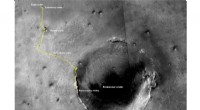
* Impact Craters: The Moon's surface is pockmarked with craters, a direct consequence of its lack of atmosphere and the constant bombardment of meteors. These craters are a testament to the vast number of impacts the Moon endures.
In Summary: The Moon's lack of atmosphere and weaker gravity allow far more meteors to reach its surface than Earth's. This is why the Moon is covered in impact craters while Earth's surface shows far fewer visible impacts.