1. Spacecraft Observations:
* Magnetometer Data: This is the most direct method. Spacecraft like Voyager, Cassini, and Juno carry magnetometers that measure the strength and direction of magnetic fields. These measurements provide detailed information about the planet's magnetic field.
* Plasma Waves: Magnetic fields can influence the behavior of charged particles (plasma) in space. Observing these plasma waves, like radio emissions or whistlers, can indirectly reveal the presence of a magnetic field.
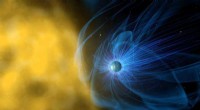
* Auroras: These are spectacular displays of light in a planet's atmosphere, caused by charged particles from the Sun interacting with the planet's magnetic field. Observing auroras through telescopes or spacecraft can indicate the presence of a magnetosphere.
2. Remote Sensing:
* Radio Telescopes: Planets with magnetic fields can emit radio waves, which can be detected by radio telescopes on Earth. The strength and polarization of these radio waves can provide clues about the planet's magnetic field.
* Spectroscopy: By analyzing the light emitted or reflected by a planet, we can look for signatures of atoms or molecules that are affected by magnetic fields. This can provide indirect evidence of a magnetic field.
* Occultations: When a planet passes in front of a star (or vice versa), the starlight can be affected by the planet's magnetic field. Observing these changes in the starlight can help determine the presence and strength of a magnetic field.
3. Indirect Evidence:
* Planetary Atmosphere: Planets with strong magnetic fields are better protected from the solar wind, which can strip away their atmosphere. The presence of a thick atmosphere can suggest a strong magnetic field.
* Planetary Rings: Magnetic fields can influence the stability and dynamics of planetary rings. Observing the structure and evolution of rings can provide clues about a planet's magnetosphere.
* Exoplanet Data: By observing exoplanets, we can sometimes infer the presence of magnetic fields based on their interactions with the host star.
Challenges:
* Distance: Most planets are very far away, making it difficult to gather detailed information about their magnetic fields.
* Limited Data: We only have direct observations of magnetic fields for a handful of planets in our solar system.
* Interpretation: Interpreting data from remote sensing and indirect evidence requires sophisticated models and can be prone to ambiguity.
Future Directions:
* Next-Generation Spacecraft: Missions like the James Webb Space Telescope and future probes will provide more sensitive observations, allowing us to better characterize exoplanet magnetic fields.
* Advanced Observational Techniques: Developments in radio astronomy and spectroscopy will provide new ways to study magnetic fields remotely.
* Theoretical Modeling: Improved models will help us interpret observational data and predict the characteristics of exoplanet magnetic fields.
Overall, while detecting magnetic fields on other planets can be challenging, the ongoing development of new technologies and theoretical models is paving the way for a deeper understanding of these fascinating celestial objects.