Basic Properties:
* Giant balls of hot gas: Stars are primarily composed of hydrogen and helium, which are constantly undergoing nuclear fusion in their cores. This fusion process releases immense amounts of energy, making them incredibly hot.
* Gravity and pressure: Stars are held together by their own gravity. The outward pressure from the nuclear fusion within their cores balances the inward pull of gravity, keeping the star stable.
* Luminosity and temperature: Stars emit light and heat due to the energy released by nuclear fusion. Their brightness (luminosity) and surface temperature determine their color, ranging from blue-white (hottest) to red (coolest).
* Lifespan: Stars have finite lifespans that depend on their mass. Larger stars burn through their fuel faster and have shorter lifespans than smaller stars.
Diversity:
* Main Sequence Stars: The vast majority of stars, including our Sun, are main sequence stars. They are fusing hydrogen into helium in their cores.
* Giants and Supergiants: As stars age, they expand and become giants or supergiants. These stars are cooler but much larger than main sequence stars.
* White Dwarfs: The remnant core of a star that has exhausted its nuclear fuel. White dwarfs are incredibly dense and slowly cool over time.
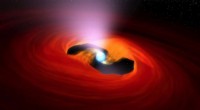
* Neutron Stars: Formed from the collapse of massive stars. Neutron stars are incredibly dense and have incredibly strong magnetic fields.
* Black Holes: The remnants of extremely massive stars that have collapsed to an infinitely dense point, creating a region where gravity is so strong that not even light can escape.
Other interesting facts:
* Stars are born in nebulae: Stars form from clouds of gas and dust called nebulae.
* Stars are constantly moving: Stars are not stationary; they are constantly moving within galaxies due to the gravitational interactions of other stars and galactic forces.
* Stars can have planets: Many stars have planets orbiting them, and scientists are constantly discovering new planets.
Observing Stars:
* Telescopes: Telescopes are essential for observing stars, allowing us to see fainter stars and gather detailed information about them.
* Spectroscopy: By analyzing the light from stars, astronomers can determine their chemical composition, temperature, and velocity.
* Astrophysics: The study of stars and other celestial objects is a fascinating and ever-evolving field.
This is just a brief overview of what stars are like. There is much more to learn about these amazing objects!