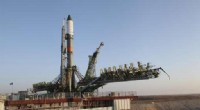
Here's a breakdown of key areas:
1. Physics:
* Newtonian Mechanics: Fundamental principles of motion, gravity, and orbits.
* Rocket Science: Understanding rocket propulsion, thrust, and fuel consumption.
* Astrodynamics: The study of spacecraft trajectories, orbits, and maneuvers.
* Celestial Mechanics: Understanding the motion of celestial bodies and their influence on spacecraft.
2. Engineering:
* Aerospace Engineering: Designing and building spacecraft, launch vehicles, and related systems.
* Mechanical Engineering: Creating and optimizing components like engines, structures, and life support systems.
* Electrical Engineering: Designing and developing power systems, communications, and navigation systems.
* Materials Science: Developing materials that can withstand extreme environments in space.
3. Life Sciences:
* Bioastronautics: Understanding the effects of space travel on the human body, including radiation, microgravity, and psychological factors.
* Space Medicine: Developing medical technologies and procedures for treating astronauts in space.
* Astrobiology: Searching for signs of life beyond Earth and exploring the potential for human colonization.
4. Other Important Fields:
* Computer Science: Developing sophisticated software for spacecraft control, data analysis, and mission planning.
* Mathematics: Crucial for calculations related to trajectories, orbits, and mission planning.
* Communication: Ensuring reliable communication between Earth and spacecraft.
Key Concepts and Technologies:
* Rocket Propulsion: Chemical rockets, ion propulsion, solar sails.
* Spacecraft Design: Orbiters, landers, rovers, space stations.
* Launch Systems: Satellites, space probes, human spacecraft.
* Space Environment: Vacuum, radiation, microgravity, extreme temperatures.
* Life Support Systems: Oxygen production, waste management, water recycling.
* Navigation and Guidance: Inertial navigation systems, star trackers, GPS.
The Future of Space Travel:
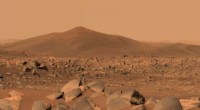
* Human Missions to Mars: Long-duration spaceflight, landing and exploration on Mars.
* Space Tourism: Private companies offering suborbital and orbital spaceflights.
* Space Resources Utilization: Mining asteroids and other celestial bodies.
* Interstellar Travel: Exploring the potential for reaching other star systems.
Space travel is a continuously evolving field, pushing the boundaries of human knowledge and technological capabilities. As we venture further into the cosmos, the science behind space travel will continue to play a vital role in our understanding of the universe and our place within it.