1. Observing Different Wavelengths:
* Visible Light: This is the portion of the electromagnetic spectrum we can see with our eyes. Telescopes like Hubble capture visible light from stars, galaxies, and nebulae, revealing their colors, shapes, and motions.
* Infrared Radiation: Infrared light is emitted by objects that are warm, such as planets, stars, and dust clouds. Infrared telescopes can see through dust and gas, revealing the hidden structures of galaxies and the birth of stars.
* Ultraviolet Radiation: Ultraviolet light is emitted by hot objects like stars and quasars. UV telescopes reveal details about the atmospheres of stars and planets, as well as the formation of new stars.
* X-rays: X-rays are produced by extremely hot objects like black holes and neutron stars. X-ray telescopes allow us to study the most energetic processes in the universe, like the accretion of matter onto black holes.
* Gamma Rays: Gamma rays are the highest-energy form of electromagnetic radiation, originating from events like supernova explosions and active galactic nuclei. Gamma-ray telescopes help us understand the most violent events in the universe.
2. Analyzing the Spectrum:
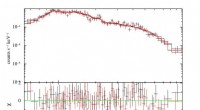
* Spectroscopy: Scientists analyze the spectrum of light from distant objects to determine their composition, temperature, and velocity.
* Redshift and Blueshift: The Doppler effect causes the wavelengths of light to shift depending on the object's motion relative to us. A redshift indicates an object is moving away, while a blueshift means it's moving closer. This helps us understand the expansion of the universe and the movement of galaxies.
* Absorption and Emission Lines: Specific wavelengths of light are absorbed or emitted by atoms and molecules, creating unique "fingerprints" that reveal the composition of objects like stars and planets.
3. Imaging and Mapping:
* Radio Telescopes: Radio waves are emitted by a variety of objects, including pulsars, supernova remnants, and distant galaxies. Radio telescopes can create detailed images of these objects and map the distribution of gas and dust in the universe.
* Interferometry: By combining signals from multiple telescopes, scientists can create images with much higher resolution than a single telescope could achieve. This technique is used for both radio and optical astronomy.
In summary, by studying electromagnetic radiation across the spectrum, scientists gain a comprehensive understanding of the universe, its structure, composition, evolution, and the physical processes occurring within it.