1. Dust and Gas Accretion:
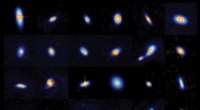
* The solar system began as a vast cloud of gas and dust.
* Over time, this cloud collapsed under its own gravity, forming a swirling disk of material around the young Sun.
* In this disk, particles of dust and ice collided and stuck together, gradually forming larger and larger bodies called planetesimals.
2. Planetesimal Growth and Differentiation:
* These planetesimals continued to accrete more material, growing larger and larger.
* As they grew, their internal pressure and temperature increased due to the gravitational pull of the accumulating mass.
* This heat caused the planetesimals to partially melt, allowing denser materials like iron and nickel to sink towards the center, while lighter materials like silicates rose to the surface. This process is called planetary differentiation.
3. Core Formation:
* As the planetesimals became even larger, their cores, composed of the denser elements like iron and nickel, began to solidify under intense pressure.
* These cores act as the foundation for the planet's structure and play a crucial role in its magnetic field generation.
4. Mantle and Crust Formation:
* The lighter materials that rose to the surface formed the planet's mantle and crust.
* The mantle is a thick layer of solid rock surrounding the core, while the crust is the outermost layer, which can be either oceanic or continental.
Key factors influencing core composition:
* Planetesimal composition: The initial composition of the planetesimals that formed the planet greatly influences the core's composition.
* Planetary size: Larger planets tend to have larger cores due to the greater gravitational force pulling materials towards the center.
* Formation environment: The environment in which a planet forms, such as the temperature and the abundance of different elements, can also influence core formation.
Types of Planetary Cores:
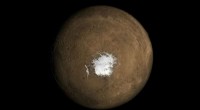
* Iron-Nickel Cores: Most terrestrial planets, like Earth, Mars, and Venus, have iron-nickel cores.
* Rocky Cores: Some smaller planets and moons have rocky cores composed of silicate minerals.
* Iced Cores: Giant planets like Jupiter and Saturn are thought to have cores composed of various ices and rocks.
In summary:
The core of a planet forms through a process of accretion and differentiation during the early stages of planetary formation. The core is composed of denser elements like iron and nickel, which sink towards the center due to gravitational forces and internal heating. The formation of the core is a fundamental process that shapes the structure, composition, and evolution of a planet.