1. Gravity: Stars are born from massive clouds of gas and dust. Gravity pulls these materials together, creating a dense core.
2. Fusion Fuel: The core of a star is incredibly hot and dense. This intense pressure and heat force hydrogen atoms to fuse together, forming helium.
3. Energy Release: This fusion process releases a tremendous amount of energy in the form of light and heat. This energy travels outward from the star's core, creating the brightness and warmth we observe.
4. Continuous Cycle: The energy released by fusion creates outward pressure that balances the inward force of gravity, preventing the star from collapsing. This process continues, with hydrogen being converted into helium, and eventually heavier elements.
Key Points:
* Fuel: The primary fuel for nuclear fusion in stars is hydrogen.
* Energy Source: Fusion is the source of a star's energy, which is what makes it shine.
* Life Cycle: The amount of fuel and the rate of fusion determine a star's lifespan and eventual fate.
* Heavy Elements: As a star ages, it fuses heavier elements, such as carbon and oxygen, until it eventually runs out of fuel.
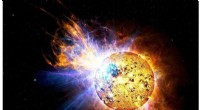
In simpler terms, stars are like giant furnaces that burn hydrogen to create light and heat. The process of fusion is what allows stars to shine for billions of years.