General:
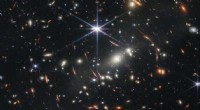
* Hypothesis: The rate of star formation in the early universe was significantly higher than it is today.
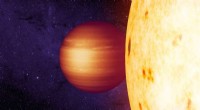
* Hypothesis: There is a correlation between the presence of exoplanets and the metallicity of their host stars.
* Hypothesis: The universe is not infinite, but rather has a finite, closed geometry.
Specific to a type of object:
* Hypothesis: The core of a neutron star is composed of a strange matter phase.
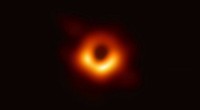
* Hypothesis: The supermassive black hole at the center of our galaxy is actively feeding on gas and dust.
* Hypothesis: The mysterious "fast radio bursts" originate from collisions between neutron stars.
Focusing on a phenomenon:
* Hypothesis: Dark matter particles interact with each other via a new force, leading to the formation of dark matter halos around galaxies.
* Hypothesis: The expansion of the universe is accelerating due to the presence of dark energy.
* Hypothesis: Gravitational waves from binary black hole mergers can be detected on Earth.
Key characteristics of a good astronomical hypothesis:
* Testable: It must be possible to design experiments or observations to gather evidence that either supports or refutes the hypothesis.
* Falsifiable: It must be possible to conceive of an observation that would prove the hypothesis false.
* Specific and clear: The hypothesis should be stated in a precise and unambiguous way.
* Based on existing knowledge: It should be grounded in current scientific understanding and observations.
It's important to remember that a hypothesis is just a proposed explanation. It's not a fact until it has been thoroughly tested and supported by evidence.